
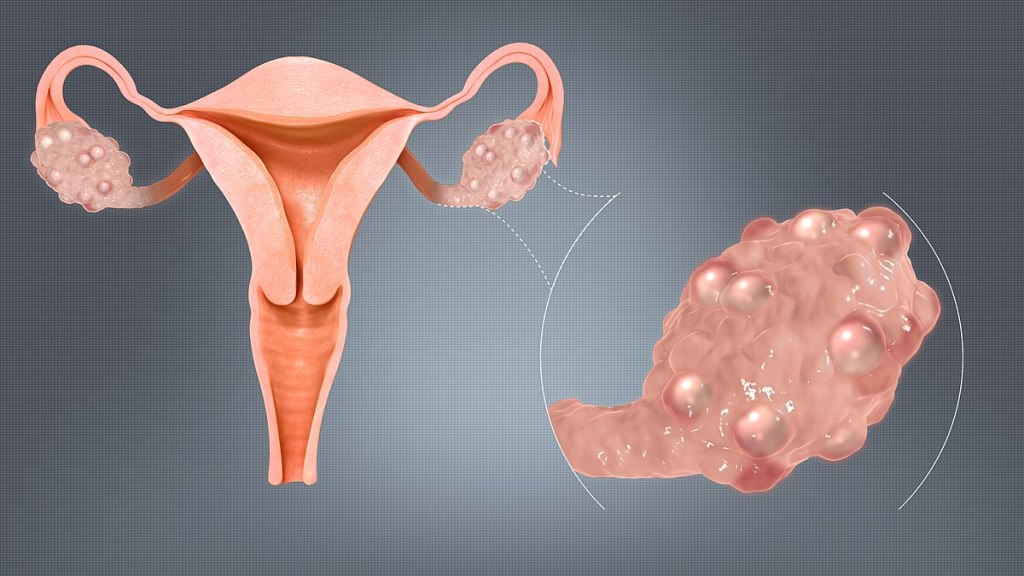
Polycystic Ovarian Syndrome, or PCOS, is a condition that occurs when women do not make enough of the hormones responsible for ovulation. Without the occurrence of ovulation, tiny fluid-filled sacs, or cysts, can form inside of the ovaries. These cysts secrete the hormones called androgens which can introduce issues to a female’s menstruation cycle as well as create many of the symptoms of PCOS. However, there are several myths surrounding this diagnosis. Read on to uncover the truth about such myths!
Myth #1: Losing Weight Can Get Rid of PCOS
Although this may sound like a great solution, there is unfortunately no cure for Polycystic Ovarian Syndrome. However, it is easier to manage symptoms if one is at a healthy weight, meaning that obese or overweight women may find more success by losing some extra body fat.
Instead of losing weight to “cure” PCOS, treatment plans are centered around managing symptoms as there is no way to get rid of the condition completely. These plans can range from lifestyle changes, such as healthy eating and exercise, to starting the use of the birth control pill.
Myth #2: PCOS is Rare
PCOS is a lot more common than one may think – it is estimated that around 5 to 10 percent of women in the United States alone, or 5 million females of childbearing age, have this condition. This qualifies PCOS as the hormonal endocrine disorder that occurs the most in women.
However, PCOS may seem rare as it is commonly undiagnosed, leaving numerous women with symptoms that they do not realize signify the occurrence of this condition.
Myth #3: You Are Unable to Get Pregnant if You Have PCOS
This is not the case for every single PCOS patient. The main part of PCOS is that a woman with this condition is unable to ovulate. However, some medications can stimulate ovulation and potentially allow the patient to conceive.
Additionally, through the use of certain Assisted Reproductive Technologies, such as in Vitro Fertilization, some women with PCOS may find success.
Thus, although it is more challenging for females with this condition to become impregnated, it is not impossible.
Myth #4: Only Obese or Overweight Women Can Have PCOS
While it is true that many obese women have PCOS and that being overweight can increase the severity of symptoms, this condition can still affect women of all ranges.
PCOS is related to one’s inability to use insulin correctly, which can lead to weight gain – a symptom out of the patient’s control.
This is why treatment plans often include lifestyle changes such as exercising regularly and eating a healthy diet to mitigate some of the symptoms associated with PCOS.
Myth #5: Having an Irregular Menstrual Cycle Means that Someone Has PCOS
Although one cause of an irregular menstrual cycle is PCOS, there are a range of other factors that could be causing this occurrence. These can include things such as stress, thyroid dysfunction, fibroids, weight, or other endocrine disorders.
Working with a doctor can help to diagnose PCOS as well as look for other possible causes of an irregular menstrual cycle.
Myth #6: You Only Have PCOS if You Have Polycystic Ovaries
Although this may be suggested by the name of the condition itself, other symptoms of PCOS mean a patient has this disease without the presence of cysts in their ovaries.
Instead, the main parts of the disease are associated with metabolic as well as reproductive abnormalities, which contribute to the range of PCOS symptoms and do not always include the formation of cysts themselves.
Additionally, just the presence of ovarian cysts does not mean a patient has PCOS. To be diagnosed with the condition, she must have two of the three following symptoms: several follicles or cysts in the ovaries, excess of the hormone androgen which manifests itself in ways such as acne or abnormal hair growth or loss, and irregular menstruation.
Sources:
“12 Common PCOS Myths.” EverydayHealth.Com, http://www.everydayhealth.com/pcos/myths-debunked/. Accessed 5 Apr. 2025.
Fact or Fiction: PCOS Myths Debunked, http://www.endocrine.org/patient-engagement/endocrine-library/pdf-library/fact-or-fiction-pcos-myths-debunked. Accessed 5 Apr. 2025.
Pennmedicine.Org, http://www.pennmedicine.org/updates/blogs/fertility-blog/2020/march/five-myths-about-pcos. Accessed 5 Apr. 2025.
“Polycystic Ovary Syndrome (PCOS).” Johns Hopkins Medicine, 2 July 2024, http://www.hopkinsmedicine.org/health/conditions-and-diseases/polycystic-ovary-syndrome-pcos#:~:text=What%20are%20the%20symptoms%20of,armpits%2C%20and%20under%20the%20breasts.
“Polycystic Ovary Syndrome.” Wikipedia, Wikimedia Foundation, 28 Mar. 2025, en.wikipedia.org/wiki/Polycystic_ovary_syndrome.
Feel free to reach out with any questions, comments, or content ideas through the feedback button!
Don’t forget to subscribe below and follow us on social media @fertilityfocus5
 Fertility Focus