

With the improvement of modern-day assisted reproductive technology, more and more options are becoming available to women and their autonomy over their reproductive health. This includes methods such as freezing eggs and embryos for females who may want to delay pregnancy until later in life but want to ensure that they still have viable conception options down the road. Read on to uncover the similarities and differences between freezing eggs versus embryos!
Freezing Eggs
The Process:
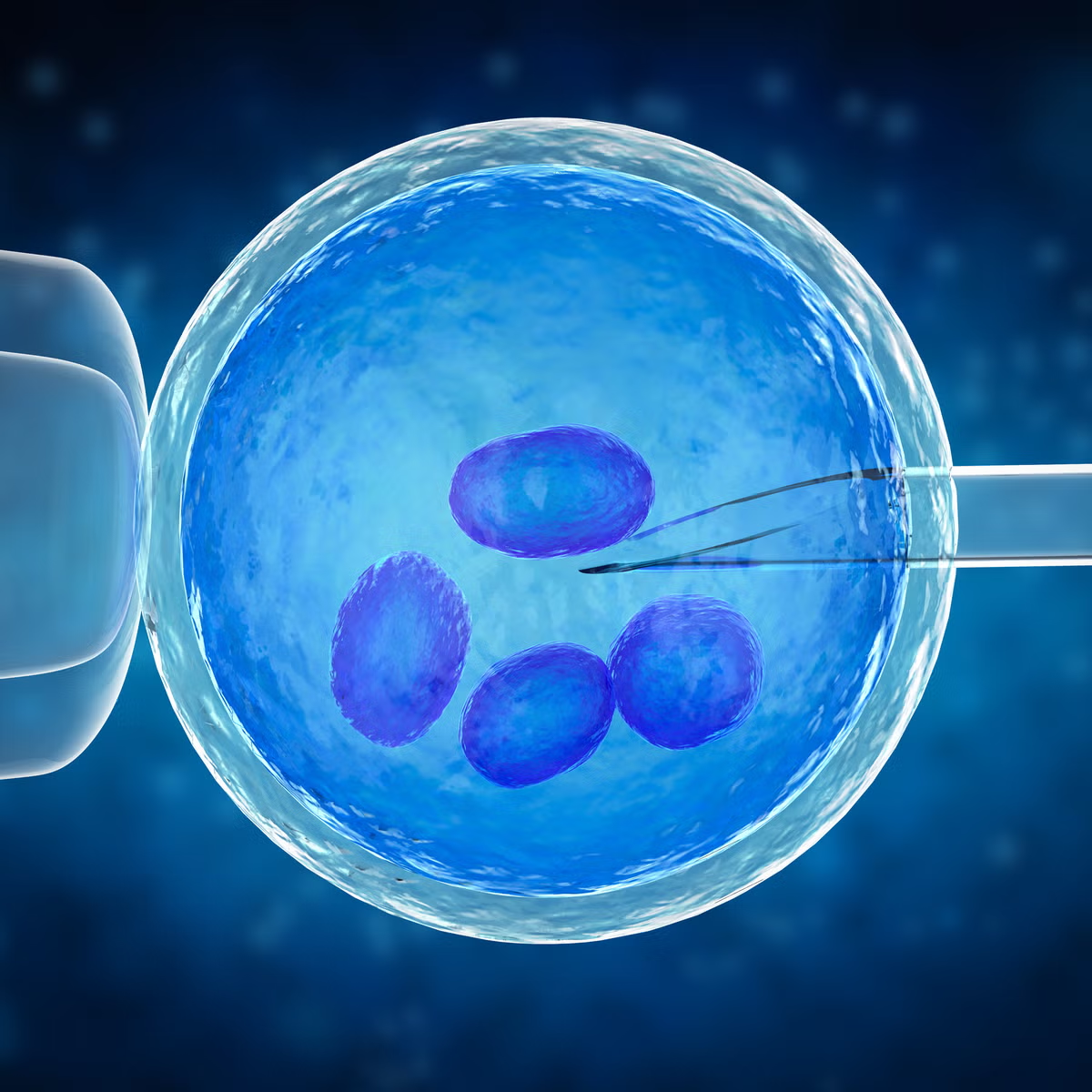
To begin the process of freezing eggs, women typically receive hormone injections for up to ten days. This stimulates the ovaries and allows for multiple fertile eggs to be produced. One’s doctor will then extract these eggs through a procedure called transvaginal ultrasound aspiration. Removing each egg only takes around fifteen to twenty minutes, meaning that a patient only has to go under conscious anesthesia.
Eggs are then frozen using either slow freezing or vitrification. During slow freezing, eggs are placed in a container with a minimal concentration of cryoprotectants, agents that inhibit cells from forming ice crystals. Then, the temperature of the container is slowly decreased, causing the metabolic rate of the eggs to decline.
On the other hand, the process of vitrification refers to the rapid freezing of eggs. A high concentration of cryoprotectants is utilized. However, since the temperature of the eggs is decreased at such a fast speed, they do not even have time to form ice crystals.
Advantages:
The three main advantages of freezing one’s eggs are that this method does not require the usage of sperm, gives women autonomy over their bodies, and that frozen eggs are easier to discard.
Since eggs are unfertilized, no sperm must be involved for a female to decide to freeze her eggs. This is beneficial for single women as they can ensure viable eggs for later pregnancy without having to worry about a sperm donor or having a current partner who will one day parent their child.
Along with this, freezing eggs provides females with independence and autonomy over their reproductive systems. Women can preserve fertility of their own volition, not requiring a partner to do so. This is also beneficial as many women choose to delay pregnancy for a multitude of reasons, and freezing only their eggs provides them with a greater number of options down the road.
Lastly, frozen eggs are easier to discard than frozen embryos. Disposing of fertilized embryos may provide a moral or ethical problem for some couples or those who practice certain religions. However, frozen eggs remain unfertilized which may make the decision not to use them an easier choice to make.
Disadvantages:
One disadvantage to freezing eggs is that they are much more fragile than embryos. This means that there is a higher chance of egg loss when they are thawed.
A second drawback is that a greater number of eggs is needed for a chance of pregnancy. It typically takes around fifteen frozen eggs to finally result in a successful embryo, meaning that one must have many viable eggs to freeze and that more must be harvested.
Freezing Embryos
The Process:
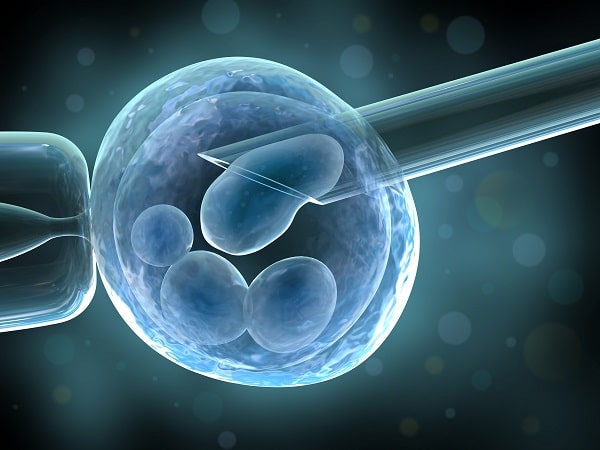
Similarly to freezing eggs, a female receives hormone injections, triggering the release of eggs. These are then extracted using the same process of transvaginal ultrasound aspiration. After this, the eggs are placed in proximity to sperm so that they can become fertilized – a process that can take up to twenty hours. Once an egg has been successfully fertilized, it is placed in an incubator to develop.
These embryos are later frozen via slow freezing or vitrification just as eggs are. However, using the method of vitrification can increase the survival rate of the embryos when they are thawed.
The embryos are then kept in liquid nitrogen until they are used.
Advantages:
Freezing embryos lowers the need for multiple egg retrievals, yields higher success rates, and embryos also have a stronger structure.
Choosing to freeze embryos requires less extractions of eggs. This is because one will know right away whether the eggs are fertile or not depending if they become a successful embryo after being placed in contact with sperm.
Additionally, there is a slightly higher chance of frozen embryo survival over eggs – around 95% of frozen embryos survive versus 90% of frozen eggs.
Plus, due to their cellular makeup, frozen embryos are able to be preserved for a longer period of time. Eggs are made up of one cell versus the hundred that comprise an embryo. Thus, when both are frozen and water is removed, the embryo will fare better as it has a firmer structure.
Disadvantages:
One shortcoming of freezing embryos is that this choice provides less autonomy for women. Since this process requires the usage of sperm, single women must rely on either a partner or donor to preserve their fertility for later in life. Complicated situations can also arise if a couple freezes their embryos and later splits up.
Sources:
Bioethics Observatory – Institute of Life Sciences UCV. “Use of Frozen Embryos to Solve Their Storage in Fertility Clinics.” Bioethics Observatory – Institute of Life Sciences – UCV, 18 Oct. 2022, bioethicsobservatory.org/2020/10/fresh-or-frozen-options/24957/.
“Eggs vs. Embryos: Which Is Right for You?” Eggs vs. Embryos: Which Is Right For You?: OC Fertility® + OC Biogenix®: Fertility Clinic, http://www.ocfertility.com/blog/eggs-vs-embryos-which-is-right-for-you. Accessed 22 Mar. 2025.
ofkw_admin. “Pros and Cons of Freezing Eggs vs Embryos.” One Fertility Kitchener Waterloo, 27 Nov. 2023, http://www.onefertilitykitchenerwaterloo.com/freezing-eggs-vs-embryos/.
“‘It Takes the Pressure off’: Why More Single Women Are Freezing Their Eggs.” The Independent, Independent Digital News and Media, 20 June 2023, http://www.independent.co.uk/news/uk/home-news/egg-freezing-woman-increasing-numbers-b2360846.html.
For more information, content ideas, or questions feel free to reach out using the feedback button!
Don’t forget to subscribe to our blog and follow us on Instagram @fertilityfocus5
 Fertility Focus